For those of you who would prefer to listen:
There was a mega deal announced Friday which will have a profound impact on the future of business, far beyond the media and entertainment space. As a former Turner guy, having worked at both CNN and Turner Sports, I couldn’t pass up digging into this deal this week. Netflix is trying to buy Warner Bros.
Netflix and Warner Bros. Discovery announced they plan to combine forces. Netflix wants to buy the Warner Bros. film and television studios, as well as the HBO network and its streamer HBO Max. That would leave the Warner Discovery cable networks in a planned spinoff to existing shareholders and operate as a separate entity. That includes CNN, the Turner cable networks, and the Discovery Channel, among others. It will be a combined stock and cash deal that Netflix pays. The Market wasn’t excited about it.
Netflix wasn’t the only interested party. Comcast and Skydance were bidding too. The Larry Ellison-backed, David Ellison-run Skydance bought Paramount Studios earlier in the year. This includes the CBS Network and the Viacom cable channels, as well as its associated streaming properties. Paramount-Skydance offered $30 per share, all cash, for the entirety of Warner Bros. They were the only ones to do so. Netflix and Comcast just want the streaming business. This will prove to be significant as the deal process runs its course. More on that in a bit.
Disruption is nothing new to Hollywood. Neither is cut-throat dealing. Rags-to-riches stories tend to do well. That is the history of Warner. Four brothers from Pennsylvania, Polish immigrants, bought a movie projector and started off playing silent movies to steel workers and miners. Their original surname was Wonskolaser. They changed the name to Warner when they arrived in America. The boys caught the movie bug and moved to Hollywood. They started producing. Their first hit was about a dog brought back to America after World War I. His name was Rin Tin Tin. After experiencing success, the Warner Bros. gained financing from Goldman Sachs. They kept tinkering and innovating, becoming a pioneer in synchronized sound. Silent films became talking films. The entertainment business forever changed with the Warner release of The Jazz Singer, starring Al Jolson in the 1920s. The rest is, as they say, history.
A company out of Scott’s Valley was created with the goal of renting DVDs to mailboxes because the Founders got tired of paying late fees to Blockbuster. It started from nothing. That was in 1997. A couple of decades later, it became a Tech Titan. Netflix is now taking over the Hollywood Giant that gave us Casablanca, The Wizard of Oz, Bugs Bunny, Harry Potter, Superman, and The Sopranos, among so many others. If the deal goes through, Netflix will own both Warner Bros. film and TV studio as well as HBO and its streaming business.
Netflix could become a one-stop shop for content for decades past and future. The company says it sees the deal helping define the next century of storytelling. Consumers may like that, as long as pricing stays reasonable. Film producers and other Hollywood players are concerned that Netflix will be able to dictate the movie business now. Content creators are concerned because they might get boxed out or fail to find space on this mega platform. Theater owners are naturally scared that Netflix will minimize the big screen or bypass it altogether. This, at a time when movie-going is already at a multi-decade low. The Netflix strategy has been to release new films exclusively on its platform or with a brief theatrical release in order to qualify for the Oscars. Congress has already been notified.
The story of the Netflix success is tied to creating fresh, original content and distributing it in an innovative way. Netflix has opened many opportunities for independent and foreign content creators to compete and succeed. Squid Games is a perfect example of that. The violent, non-English speaking Korean series was turned down for years before Netflix picked it up. It was a smashing success which completely stunned the entertainment industry. Netflix spent $20 Million on Squid Game the first season, and made $900 Million. Now it’s attempting to acquire a legacy media and entertainment mogul that has struggled to transition in the 21st century. The Warner Bros. studio and library is a prized possession. Content is still king. Creating and distributing coveted content is the key. Netflix has proven elite here.
There is so much controversy and conflict around this deal. Traditional Hollywood isn’t happy. Movie theater operators aren’t happy. Regulators aren’t happy. The White House doesn’t appear happy either. There aren’t many who are happy about the prospects of this deal. It didn’t take long for politics to take hold. In fact, it happened immediately. To start, the media industry has been struggling to maintain credibility and market share for years.
The Department of Justice has raised flags about competition. With over 300 Million subscribers, Netflix is the streaming king. Warner Bros. has over 100 Million streaming customers, mostly from HBO Max. They are #1 and #4 respectively in the space. Amazon and Disney are #2 and #3. Regulators will be looking at the concentration of subscribers with a combined entity. But realistically, many HBO Max subscribers are also customers of Netflix. It will take time to sort this out.
The White House didn’t have a formal comment, but a source said the deal prospect is being met with “heavy skepticism”. Remember, President Trump has strong relations with the Ellisons. What’s more, Netflix Founder Reed Hastings is a vocal Democrat and was a strong supporter of California’s recent Proposition 50, which passed. Plus, Netflix has a partnership with the Obamas. The Trump Administration likely has an opinion here. Bottom line: There are plenty of roadblocks that can get thrown in the path. Politics are almost guaranteed to impact. A slow roll is likely the way for this deal approval process. Don’t expect any immediate change to your Netflix or HBO Max subscriptions, for those of you that have them.
It’s natural that this announcement conjures up memories of the AOL-Time Warner merger. That was the mega media deal that tends to represent the Dot-com bubble burst. But creative ideas and partnerships have worked. I remember that day in 1995 when Time Warner announced it was buying Turner. I’d only been on the job for 4 months in Atlanta. That radical company in the south became part of an empire. The Braves won the series that year. The Olympics were coming to town. OJ was on trial. Michael Jordan returned to the NBA. It was quite a time for cable television.
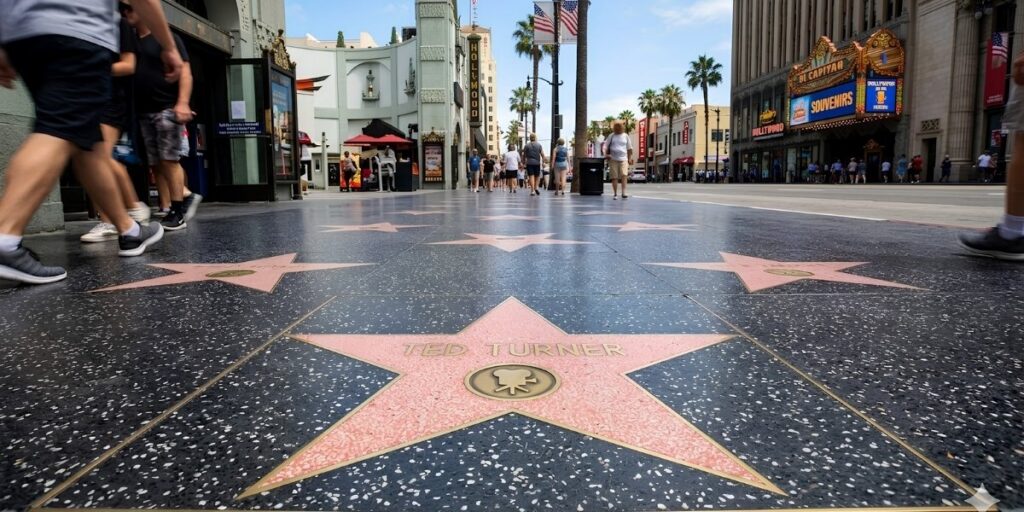
Ted Turner was my first boss. Truthfully, I only met him twice. Ted was definitely a maverick, then he became a mogul. Turner bet the farm a couple of times and it worked out. The first changed the way we watched television with cable and satellite. He created the Superstation which brought Braves Baseball to every living room across the country. A few years later he made a bet that the world wanted 24-hour news and created CNN which he famously said would be on until the world ends. So far, he’s been right. Ted also was not a fan of the AOL-Time Warner deal. He was considered an outcast which led to his departure. The AOL-Time Warner merger is considered one of the greatest failures. Ted was right on that one too.
Today is a far cry from the CNN and Turner Broadcasting Corporation that I worked for in the 1990s. Cable companies are desperately trying to move away from their dependence on cable. But content is still king. And disruption is not new to the things we watch. Those Warner brothers did it. That Disney guy did too. Spielberg and Lucas changed the way movies were made and HBO disrupted how movies were watched. Turner changed the way we watched the news. Rupert Murdoch disrupted the 1990s with the advancement of Fox and The Simpsons. Then the advancement of the internet disrupted everything. It’s always a must-see. And AI is up next.
Netflix stock sold off Friday as the Market questions it buying these assets and borrowing to do it. Debt is a growing issue and Silicon Valley has been increasingly issuing debt to cover its explosive spending. Netflix, like most Tech Titans, has been a builder not a buyer. This is a big change.
It seems to be going full circle. All of this M&A is resulting in a smaller number of giants in the entertainment space, which is exactly what we had in the 20th century. The difference is a matter of geography, though it’s clearly so much more. Instead of the Big 3 TV Networks out of New York and the handful of movie studios in Hollywood, it’s Silicon Valley that is leading the charge in this Digital Age.
What remains from the legacy players are Disney and NBC’s Peacock in the streaming wars. Of course, they have been challenged for years by the Tech Titans’ entry in their space. It will be interesting to see how Apple and Amazon respond as they have clearly increased their activities in Hollywood. NBC Universal is in the midst of a re-org and Bob Iger’s tenure at Disney is set to expire (again) next year. Expect an acceleration of movement, not less, in this arena.
Back to the Market:
Volatility has cooled quite a bit as we entered December. The VIX fell from 28 to 15 over the course of the last few sessions which helped slow the selling. The Thanksgiving rally has so far stuck. But corrective price action lingers below the surface. It’s definitely a process. We expect the uptrend to remain in place into year’s end. Liquidity will drain in the final days, which tends to increase volatility, but a Fed cut next week and seasonal buying should keep a bid under stocks.
Have a nice weekend. We’ll be back, dark and early on Monday.
Mike