For those of you who would prefer to listen:
Price increases have slowed. Inflationary pressures are subsiding. The November Consumer Price Index (CPI) reported prices rose at a 2.7% rate compared to a year ago. That was cooler than the September report, which is the most recent. That came in at 3%. There was no October report due to the government shutdown. Core CPI, which strips out food and energy, was up just 2.6%. That gave a serious jolt to stocks. The rally is back on.
There were some rumblings that the data was distorted. The number might have come in lower than actual due to the shutdown. Apparently, data was only collected in the second half of November, when retail promotions were building. Black Friday sales ballooned. That said, one of our sources sees these disinflationary pressures continuing into the new year. It’s being led by lower prices for Oil, rent and clothing. They’ve had a good call. The Job Market has softened, too. Inflation is coming down and unemployment is going up. That could have the Fed cutting rates more than previously expected. The Market definitely likes the prospects for that.
A global power crunch is emerging as one of the defining economic and geopolitical forces of the 21st century. Power is power. Nations that control fuels, critical minerals, innovative systems and grid equipment have a serious advantage. Oil was the prize of the 20th century. It fueled global economic growth. It’s still a major contributor today. And Venezuela finds itself caught squarely in the center.
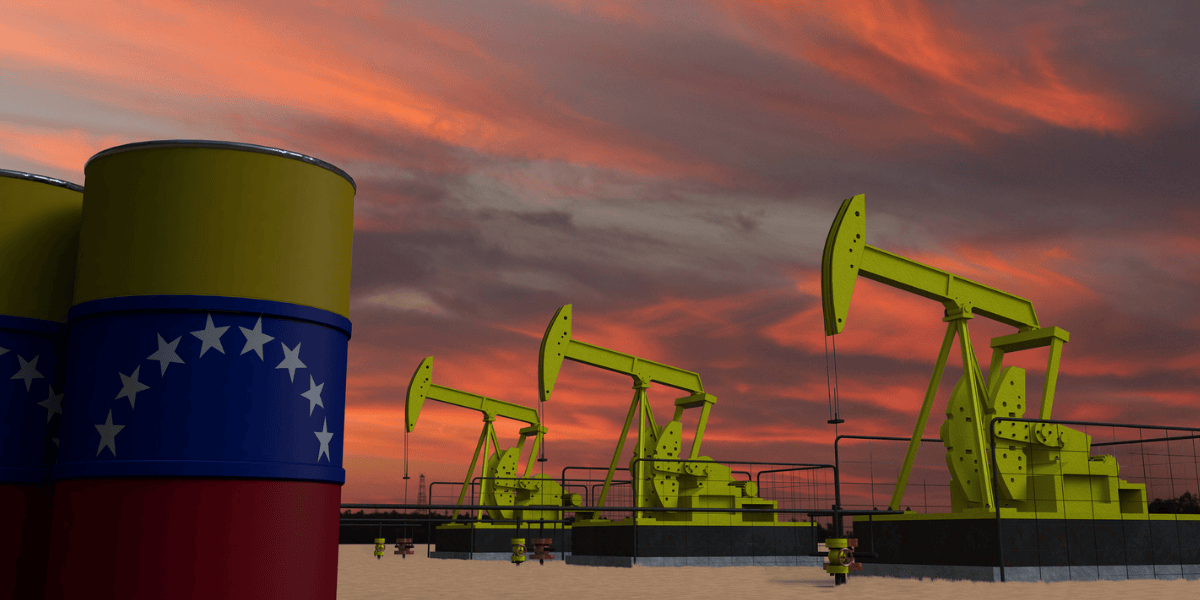
Venezuela holds over 300 Billion barrels of Oil, the largest proven reserves in the world. That’s 6.5 times the reserves of the United States. Saudi Arabia is second, with 266 Billion, followed by Canada, Iraq and Iran. At its peak, in the 1990s, Venezuela was producing 3.5 Million barrels of Oil per day. Today it’s less than 1 Million. The lack of investment and general mismanagement is the reason. Venezuela’s socialist movement from Chavez to Maduro has left its Economy in shambles. The only non-sanctioned Oil that leaves the country these days is shipped by Chevron.
The United States has sent its largest fleet to the Caribbean since the Cuban Missile Crisis. There’s a blockade. It’s been a highly controversial move. President Trump has been vocal about Venezuela for years. The White House has been targeting drug traffickers and terrorists, among others. The ultimate goal is not clear. But one thing certainly is: Venezuela has Oil. Throwing politics aside, the best one can these days, it’s the Market impact and reaction which we track closest. That’s the best way to cut through the noise and interpret facts in order to understand the why and anticipate what’s next.
This, from one of our sources:
“Venezuela and its Oil lie at the nexus of two of Mr. Trump’s stated national security priorities: dominance of energy resources and control of the Western Hemisphere. Venezuela has about 17 percent of the world’s known Oil reserves, or more than 300 Billion barrels, nearly seven times the amount in the United States. And no nation has a bigger foothold in Venezuela’s Oil industry than China, the superpower whose immense trade presence in the Western Hemisphere the Trump administration aims to curb.”
Oil dominates Venezuela’s Economy. Exports account for nearly all its income. Venezuela’s GDP is estimated to be $82 Billion this year. That’s not even Top 100 in the World. For perspective, the United States is estimated to generate $30 Trillion in GDP this year, by far the largest Economy in the world. Want to see the difference between rich and poor? US GDP per capita is $85K. Venezuela is $3,100. In other words, it’s the country’s income per person. The United States isn’t even the richest, in terms of GDP per capita. That goes to the country of Lichtenstein, followed by Switzerland, Ireland and Singapore among others. The US is #8 in that category. China is #78, with a GDP per capita of less than $14K. The point here is, Venezuela is poor. But it has vast quantities of a resource that global powers covet.
Roughly 600K barrels of Oil are shipped from Venezuela daily. Most of it goes to China. That was before the blockade. President Trump wants that Oil for the United States. He has wanted it for years. During his first term, according to our sources, he backed attempts to oust Maduro. After he left office, he expressed frustration in the failure. “When I left, Venezuela was ready to collapse,” he said in a 2023 speech. “We would have taken it over. We would have gotten all that Oil.” He certainly doesn’t want China to have it.
Venezuela nationalized its Oil industry in 1976. Before, foreign companies accounted for 70% of the production there. American producers like Exxon, Mobil and Gulf Oil were major players. Today, only one American company still operates in Venezuela. That’s Chevron. The company has operated in Venezuela for over a century. It has plenty of scars to prove it, along with the wins.
Most of Venezuela’s Oil trading violates U.S. sanctions. And it props up adversarial governments like Cuba’s. Venezuela is a major provider to the Black Market. The South American country has been using the same strategy as Russia and Iran, contracting shadow fleets flying neutral flags in hopes of sailing below the radar. Payment comes in the form of crypto, commodities and other currencies, intentionally bypassing Dollars and those sanctions.
In the past 2 weeks, the United States has seized a Venezuelan tanker and promised to blockade all sanctioned Oil tankers going in and out of its ports. Officially, these ships are trading crude in violation of U.S. sanctions on Iran. It’s been happening for years, especially since Russia invaded Ukraine. Many tankers are stuck right now, sitting off the coast of Venezuela, carrying crude. The Market sees it 2 ways, which speaks to the volatile price action. It sees it as a surplus of supply, which sends prices lower. But it also sees the risk of being shut down, taking away that supply. That sends the price high.
The price of Oil has fallen over 20% this year, back down to levels last seen in 2021. Demand has been firm, but supplies have increased as OPEC raised production and both Russia and Iran keep supplying shadow fleets to Asia, despite the Venezuelan blockade. All the while, the United States continues to lead global production with 13.5 Million barrels per day. More supply than demand sends prices lower. That’s Econ 101. We benefit from the lower price. But there are other costs associated. Some of those costs get paid down the road. Some get paid in Dollars. Others come at the cost of national security. It’s really complicated stuff.
Power impacts all things economic. Oil fuels most of the activity. Lower input costs and falling prices at the pump are disinflationary. That means more money to spend elsewhere. Those disinflationary forces would allow the Fed to keep lowering rates and increase the money supply. That’s good for Consumers. That’s generally great for assets, particularly stocks. The Market is certainly celebrating that right now.
The Digital Age is increasingly powered by electricity. Many sources are supplying it, led by natural gas, while alternatives keep growing. Among them are nuclear, hydro and solar. Supplies struggle to keep up with demand. Energy is very investable. This surge in demand is colliding with a power system that was built for an earlier era, in an earlier era. It’s still primarily a 20th-century system in the 21st century. Today’s global electric networks can’t keep up. Power availability, affordability and national security have become not just technical challenges, but strategic imperatives that will determine a country’s economic competitiveness and geopolitical influence. Energy is not just a resource. It’s a strategic weapon. That much is clear in the Digital Age. It’s been that way for decades.
Despite all the controversial activities and events, the Market is back near all-time highs. Planet Earth sure is a complex place. My goal this week is to try to explain what’s going on and why it matters. Quite frankly, that’s pretty much my goal every week. An important point is the Stock Market is not the Economy. The Economy is not the Stock Market. It’s always critical to remember that. Though there’s tremendous overlap, they’re definitely not the same. Another point is Power is Power. There’s a fierce battle going on here. But we also mustn’t forget that Knowledge is Power, too. That’s why it pays to study and to think and to listen as we learn. Informed decisions generally lead to better outcomes.
Despite all the controversial activities and events, the Market is back near all-time highs. Lower inflation and the prospects for more rate cuts fueled it this week. Politics and geopolitics are front and center today. But the Market keeps looking past the actions and the noise. As long as earnings continue to grow and money gets cheaper, there should be a solid bid under the Market into the new year. That’s how we’re seeing it today.

In closing, I’d like to thank Maria Ageev for her 10 years of quality service at Bedell Frazier. Maria brought professionalism and a whatever it takes attitude to our firm, always looking out for our clients. Maria made Bedell Frazier better. Maria will be missed. Fortunately, Maria will always be part of the growing Bedell Frazier family.
Have a nice weekend. We’ll be back, dark and early on Monday.
Mike