For those of you who would prefer to listen:
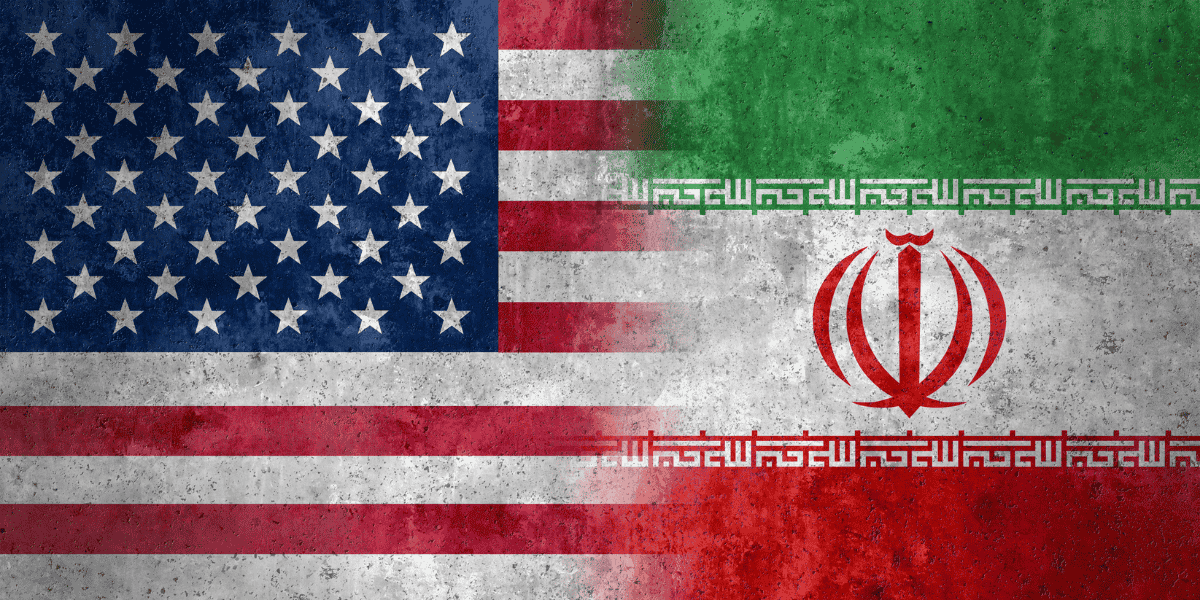
It’s been a week since the United States and Israel launched the attack on Iran. Emotions are running high. No surprise, politics are running rampant, too. It’s an unfortunate fact that politics seemingly dictates everything these days. I’m not getting into politics here. My goal is to focus on the facts as we understand them and try to anticipate where things are headed. As always, my focus is from a Market standpoint. There are plenty of political opinions out there to chew on. One thing is clear, America’s military prowess and intelligence agencies are second to none. That’s something that pretty much every American can agree upon.
This is probably going to be a long one. There’s much to cover and think through. My fingers are locked into the keyboard. If you prefer to listen rather than read, that’s always an option now. I hope you find this piece insightful and valuable. Let me know what you think.
A joint airstrike between the U.S. and Israel killed the Supreme Leader at his compound in Tehran. Also killed were many senior Islamic Revolutionary Guard Corps (IRGC) members. The air attacks substantially reduced Iran’s military capabilities and decimated its nuclear weapon plans. The objectives, as we understand them, were to destroy Iran’s nuclear capabilities, target their missiles and drones, minimize the strength of their regional proxies, and punish the regime for their treatment of the Iranian people. There has definitely been some conflicting messaging from the White House about regime change, plans for peace, not to mention the word “war”. I will touch on all of this below.
The Market reaction to the conflict has been fairly tame, all things considered. It’s actually quite surprising. The Stock Market took an initial beating when news broke about the escalation of missile launches and rumors of the closing of the Strait of Hormuz. The Dow fell 1200 points. The S&P fell over 170. That’s 2.5%. The price of Oil spiked. But the midday word that the U.S. would keep the strait open with an offer to escort Oil tankers, also providing insurance, provided a lift. Most of those losses were erased. Wednesday brought more reprieve as stocks rallied, nearly erasing all of the week’s losses. Then came Thursday. Thursday brought more selling. The expanded missile launches have investors concerned of a prolonged conflict, far beyond a few weeks as stated. The sentiment continued Friday. Selling did too.
I spent this week attending over a dozen strategy calls and studied multiple research reports. There’s no shortage of information out there. Our independent Washington sources are so valuable at times like this. In fact, this is an event not seen in my lifetime. I remember 47 years ago, when the Shia cleric Ayatollah Khomeini led the Islamic Revolution. The American-backed Shah, suffering from cancer, fled the country. 66 Americans in Tehran were taken hostage. Death to America became a battle cry there. I remember those yellow ribbons. The Raiders wore them on their helmets when they won the Super Bowl. That was a long time ago. Iran has been a threat to America ever since.
One of my sessions this week was with General David Petraeus. The 4-star Army General served in both Iraq and Afghanistan, overseeing the surge. He then became CIA Director under President Obama. He is now a Partner at the financial firm KKR. General Petraeus has always been a guy who I stop at attention when he speaks. General Petraeus supports this conflict, but does so with great caution. He understands as well as anyone that opportunities don’t present themselves often, and in his line of work, one needs to be quick and decisive. He commended the excellent work by intelligence officials to track and establish the patterns of the Supreme Leader and his senior leaders. He made clear he has strong confidence in Dan Caine, the Chairman of the Joint Chiefs of Staff. Petraeus also called Iran’s response by attacking the Gulf neighbors a “stupid decision”. They were neutral going into this. Their neutrality would have forced the US and Israel to be quick and limited, wanting stability in the region. The attacks brought them in to help play defense, and might see some join on offense. That said, none of the Gulf states wants to see an extended military conflict in the region. They’re starting to voice back-channel concerns and irritation already.
Iran is weak. What had been speculated for a bit was validated with the 12-day war with Israel last year. All of our sources emphasized that October 7th changed everything. Israel’s September 11th moment, with the violent attack from the Iranian-backed Hamas, triggered a retaliation throughout the region like never before. Iran and its proxies were hit hard. Syria’s collapse played a role, too. The Islamic Revolutionary Guard, led by an 86-year-old cleric, who brutalized its people and stoked terror throughout the region, was very vulnerable.
Iran could and should be a much stronger nation. It has a highly intelligent population of 90+ Million. The people have a deep affection and pride for Persian culture. They’re believers of science and art and community. The country has the 3rd largest Oil reserves and is the 4th largest producer. It could be very wealthy. This ruinous regime has caused poverty at home and isolation abroad. Iran’s currency value has fallen 99% since 1979. It has faced constant inflation, currently near 50%. Iran’s poverty rate sits at 36%. The people have been suppressed.
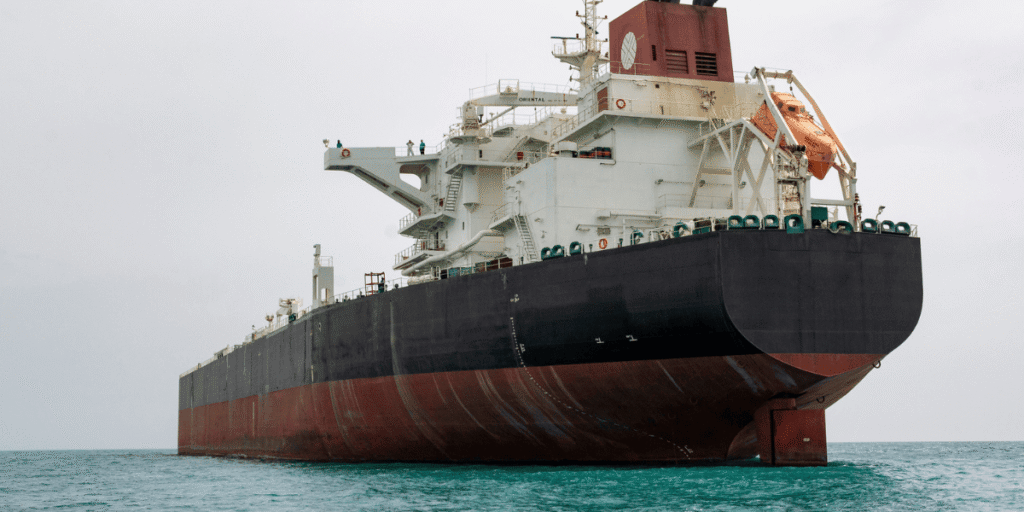
At the heart of the issue, from a Market standpoint, is the Strait of Hormuz. It’s that 21-mile-long choke point in the Persian Gulf. It’s effectively closed now. Normally, 65 ships pass through daily. Now it’s less than 5. I’m hearing yesterday it might have just been 1. These vessels usually transport 21 Million barrels per day through the Strait. That’s 20% of the daily global supply. It’s one-third of all seaborne exports. Most go to China. It’s not just Oil. Liquefied Natural Gas (LNG) is plentiful there, too. 20% of global LNG goes through the Strait from Qatar. That Gulf nation is the largest global producer. 10% of that gas goes to Europe. 90% goes to Asia. Importantly, the United States has become the largest exporter of LNG. Two-thirds of American gas exports go to Europe. That accelerated after cutting off Russian gas. You see the importance there.
The Oil Market initially responded as if the disruption would be just a couple of weeks, not months. It is definitely re-thinking that heading into the weekend. The cost to ship Oil and Gas has skyrocketed. The price from the U.S. to Asia has doubled. The cost to ship from the Persian Gulf to China is up a whopping 6X since January. Insurance costs are up 12X. The back-up is causing storage issues amongst the Gulf State nations. European nations reportedly hold 90 days’ worth of Oil stocks. After that, they run out. The clock is indeed ticking.The higher costs will bleed into the economic system if the conflict continues for an extended period of time. That’s what the Market sees.
The White House indicated that the U.S. Navy would provide escorts for vessels and the U.S. government would provide insurance. It’s not exactly clear how that would be implemented. Not to mention, most shippers don’t want to take the risk. General Petraeus said his biggest concern at U.S. Central Command was mine laying in the Persian Gulf. That has long been considered Iran’s last desperate option. Intelligence reports have indicated Iran has loaded mines on vessels. That would cause serious damage. Clearing it would take weeks, if not months, which would be a huge hit to the Global Economy.
The flow in the Persian Gulf has stalled. JP Morgan did a study that suggests that Iraqi and Kuwaiti Oil exports could cease within days if the Strait is completely shut. Maersk, the large shipping company, has suspended its operations in the Persian Gulf. The United States is the largest Oil producer at 13 Million barrels per day. It’s close to maximum output. American Energy companies couldn’t possibly fill the void. This all helps explain $90 Oil. It was $54 a month ago. $100+ is very possible, if not probable, before all is said and done. Oil last cleared $100 when the Russians invaded Ukraine.
Tehran has shown a willingness to hit energy infrastructure locations throughout the region. That includes the large Saudi facility Ras Tanura and the Fujairah and Mussafah Oil terminals in the UAE. Ras Tanura produces 550K barrels per day and is one of the largest export terminals in the world. These are major ports in the Middle East with significant economic consequences in the region. Now that the United States and Israel have air supremacy in Iran, Kharg Island is an obvious target. This is Iran’s primary Oil export terminal. Nearly 90% of Iranian Oil comes from there.
China has been noticeably silent around this conflict. It has an alliance with Iran but has not been overtly assisting the Middle Eastern nation. China also has strong economic relations with all the Gulf States. China wants stability. It doesn’t want to complicate or hurt relations. Our sources say there are constant back-channel conversations happening, encouraging all parties to not attack energy facilities.
China just announced its projected economic growth for 2026 at a range of 4.5%-5%. That would be the lowest growth in decades. It has also substantially increased its energy supplies, trying to cushion its dependence on unstable sources. China wants/needs the Strait of Hormuz open. Nearly 90% of Iranian Oil exports and over half of Venezuela’s went to China last year. Iran and Venezuela make up 17% of China’s overall Oil purchases. Those supplies are anything but stable now. What’s more, China has to be very concerned about a popular uprising in Iran. This is always a threat to an authoritarian regime. No doubt Putin is watching things closely. President Trump and President Xi are scheduled to meet at the end of the month. Our sources believe the summit still happens. There’s much to discuss.
There’s been some confusion about the goal of regime change. The words have been spoken. But it’s not clear what it really means. The situation is quite complicated. To start, there’s only been 2 Supreme Leaders in 47 years. But here’s the deal: The Iranian regime is not a person. It’s not really a team either. It’s effectively a large and layered system. The Iranian Regime, formally known as the Islamic Revolutionary Guard, is believed to comprise roughly 1 Million men, mostly armed, committed to its anti-western theocratic ideology. Despite the vast damage inflicted, the regime still has a tight grip on power in Tehran.
Essentially, Iran has been a police state for the better part of 5 decades, which has consistently brutalized its own people. Forcing this regime change will be hard. Doing it with an air campaign would be that much harder. How do the Iranian people feel about the regime, you might wonder? This, according to our sources:
20% of the Iranian people actively support the regime. This is largely represented by the Basij militia. It’s a domestic security force used to suppress dissent, monitor social activity, and enforce religious morality. They number as many as 15 Million members. It’s been described to me as a biker gang of thugs that swing pipes at protesters and have machine guns. These are the ones who are believed to have killed the nearly 30K protestors in January’s uprising. If toppled, the Basij militia loses everything. They’re willing to fight to the death. So, there’s that.
Another 20% of the Iranian people actively oppose the regime. They risk their lives every day and are always targets. They’re also willing to risk their lives for a cause greater than themselves for the betterment of the Iranian people. That takes serious guts.
No surprise, the remaining 60% of Iranians silently oppose and are waiting/hoping for a new leader or regime to emerge. They live in constant fear of the Basij militia. They’re definitely the silent majority.
It will take quite a force to overthrow this Iranian regime. General Petraeus called it an elusive objective through the air. The big question is whether there will be sufficient opposition forces to rise up and inspire the masses to follow. The White House has reportedly been having discussions with the Kurds, an indigenous group in the region that is mostly Sunni and are no friends of Iran. The Kurds are considered the largest stateless community in the world. General Petraeus said the Kurds are definitely a possibility to help on the ground. There’s also the fact of modern warfare in cyberspace. Iran has reportedly been ramping up its hacking attempts into security cameras as well as government and financial institution sites. There are multiple layers of war to contend with.
This military engagement has come with close cooperation with Israel. The United States and Israel have long been allies. But this military collaboration really grew in 2023, after the October 7 attack, and escalated in defense of Israel in 2024. The 12-day war in the Summer of 2025 was evidence of its capabilities. It blasted Iran’s nuclear facilities. That enhanced the confidence to launch this recent attack. Our sources believe that significant progress is being made with the objectives laid out. There has been a substantial reduction in air and missile defense in Iran. The American and Israeli militaries can operate much more freely now. U.S. Military superiority is unmatched. One source indicated that President Trump is feeling emboldened and unrestrained. Success in Iran last Summer and Venezuela in January is seemingly validating that feeling. Plus, it’s personal because the Iranians reportedly tried to assassinate him.
Despite America’s military might. Weapons are becoming short in supply. Much has been sent to Ukraine in recent years. Production is about to get a serious lift. Lockheed Martin, the world’s largest defense contractor, currently produces 600 Patriot Missiles every year. That number is expected to hit 2,000 by 2030. New equipment and new methods are being utilized and embraced. We can’t continue with $2 Million Patriot missiles shooting down $20 Thousand drones. Modern warfare has learned a lot by watching Ukraine. It is conducting a very successful, lower-budget operation, much to the surprise of most. You may recall, Kyiv was expected to fall within 48 hours. It’s now been standing for 4 years.
The United Arab Emirates is also a big buyer of American military equipment. The Gulf nation successfully intercepted 755 of 812 Iranian drones within 24 hours. What an astounding statistic of success. These are short-range interceptors. Drones are increasingly playing a role in war. Ukraine produced 7 Million drones last year. The U.S. just 300K. “Missile Math” is a concern. Petraeus emphasized the U.S. needs to move quicker on this. Military leaders have been pushing for it, but bureaucratic issues have slowed or stalled momentum. Ukraine has proved once again that necessity is the mother of invention.
What does this mean for Russia and Ukraine? The Ukrainians are very experienced now, both defensively and offensively. Our sources indicate that Russia is losing their sophisticated air and missile defense at an extraordinary rate. That said, they don’t see much of a change in that war. Both are locked in with conviction. It’s been reported that Russia is helping Iran with intelligence to locate U.S. targets. It’s the first evidence of another American adversary getting involved in the conflict. Russia and China have traditionally aligned with Iran. But there’s a big difference between the two. Russia is a rogue regime that wants instability. Moscow has long been threatened by global norms established by the West. China, on the other hand, is an economic power that wants and needs stability. The Asian nation is very economically oriented. Relationships are transactional. It has a population of 1.4 Billion with a leader who embraces the role of superpower. It’s pretty clear that China wants to dominate the 21st century.
Is there an off-ramp to this conflict? That’s got to be a question everyone is wondering. By attacking its neighbors, Iran has united the Gulf states with their response. Our sources believe the Gulf members will likely get involved militarily to retaliate and secure air supremacy and military capabilities. It definitely helps mend the rift between the Saudis and the UAE. Israel and the Emirates are very close now. Saudis keep getting closer too. They all unite in their hate for Iran.
Hezbollah just got involved. It launched an attack on Israel. The Iranian-backed proxy in Lebanon still has many short-range missiles and rockets. It appears that Lebanon has a once-in-a-lifetime opportunity to once and for all dismantle Hezbollah with Israeli aid. Iran is likely not going to have a Navy at the end of this. Its ability to resupply weapons has been seriously compromised. The bombings have made it difficult to communicate within the Iranian military and network members. These are indeed desperate times in Tehran. Perhaps that’s why they attacked other Gulf states.
America’s Economy is far less dependent on Oil than it was in the 1970s. The transition from manufacturing to more of a services Economy has the United States using less energy per unit of GDP in over a century. And what energy is consumed, it is mostly from domestic sources and reliable providers. The Digital Age is a much different world than when the Islamic Revolution took hold. Power in America has shifted from Oil to electricity, which is increasingly being fueled by natural gas. America has a surplus of gas and is a net exporter.
There’s an interesting development as to whether this is a structural or cyclical issue for Energy. Geopolitical events generally force temporary workarounds. An example is the halting of Russian Oil to Europe. Other sources filled the void. But global infrastructures have decayed over the years. Investment and maintenance have lacked. Venezuela is exhibit one. It’s definitely not alone. Capital Expenditures in global Oil and Gas peaked in 2014. That was $700 Billion. CapEx was cut in half in 2020. That was Covid. It just got back to $500 Billion last year. Demand is expected to grow by over 50% by 2030. Artificial Intelligence is the driver there. AI power demand comes at a time when resources are supply-constrained. This time is indeed different.
Back to the Market
War threatens economic growth and higher prices. That’s been a risk all along with the various military conflicts around the globe. Volatility consumed the Market this week, led by rising Oil prices and uncertainty. Wednesday’s rally nearly erased all of Monday and Tuesday’s losses. Thursday brought more selling as the missile launches accelerated. The selling accelerated on Friday with the President’s demanding unconditional surrender. Talks of $150 Oil added to it. The Market does not want a long-term conflict. Few do.
Bond yields rose, sending prices lower as inflationary pressures build. Crude prices exploded higher again Friday, with WTI clearing $90 for the first time since the Russian invasion of Ukraine. Yields up. Oil up. Dollar up; That’s a crushing combo for the Economy. The Market still seems to believe this is a relatively short event. The Futures Market is pricing WTI crude back below $70 by December.
So how does this all end? Of course, nobody knows. Petraeus, also a former economics professor, responded frankly, saying the only answer starts with “it depends”. Will there be an opposition force that emerges? He was asked about the son of the Shah. Petraeus knows him. Reza Pahlavi has impressive qualities, but hasn’t been in Iran. He lives in the United States. Reza might not have much influence on the ground. General Petraeus said something similar to Syria might be workable. A former Al Qaeda member, Ahmed al-Sharaa, led the overthrow of the brutal Assad regime. Petraeus called him a charismatic leader, but bears watching; Trust but verify. He still needs to establish a government that represents all of the tribes and people. Someone like that could emerge in Iran.
General Petraeus believes the current administration is very mindful of what happened in Iraq and Afghanistan and doesn’t want to repeat the mistake. There is no appetite for more forever wars. As for a ground war, the Administration rightly didn’t rule out anything. “You never tell the enemy what we won’t do”. The Middle East is forever changing. But there’s no assurance that Iranian-backed terrorism is over. His base case: The Regime stays in charge. Someone arises to say we won because we survived.
The US might be able to create the conditions that lead to regime change. But that will require someone or many on the ground in Iran to have the guts, charisma , and vision to represent a new, modern way for Tehran. Could it still work with the current regime? It happened in Russia. The KGB saw a future for itself without the Communist Party. They were right. Putin’s reign has clearly proved that. The question in Iran is, does the Iranian Revolutionary Guard see a power lane for them in the aftermath of this conflict? They definitely have the weapons and a monopoly on striking fear.
Imagine this Bull case: A smart, passionate and charismatic leader does arise in Iran. The people rally around a new vision for a modern nation, driven by science, community and faith. Economic growth and opportunity for the people to elevate are the goals. Iran embraces global investment. It opens up for travel and tourism. Women can vote and ideas are exchanged freely. The Iranian-backed proxies fold. Global nations no longer need to aggressively spend time, money and energy worrying about terror rooted from Tehran. The Persian capital city looks more like Abu Dhabi and Dubai, with a magnetic force of commerce and social activity. Perhaps that vision doesn’t seem probable today. But it definitely seemed impossible for the last five decades. As they say, anything is possible. It always starts with an idea with purpose and passion. That sure can be powerful. The Market would love this outcome.
Let’s see what happens over the weekend. More missile activity is expected. The conflict continues.
Thank you for staying with me the whole way. I hope you found it valuable and interesting. Bedell Frazier was built and has grown with the commitment to face challenges and adversity head-on. The brand stands for always showing up and answering the call. We sure have been through a lot together. From tech bubbles and financial crises to foreign wars and global pandemics, you can count on Bedell Frazier to be there at your side. It’s not just words; It’s a mindset. It’s precisely what dark and early means.
Have a nice weekend. Fill up your tanks Friday. Gas prices are going higher. But we’ll get through this. Bedell Frazier knows what to do.
We’ll be back, dark and early on Monday.
Mike