For those of you who would prefer to listen:
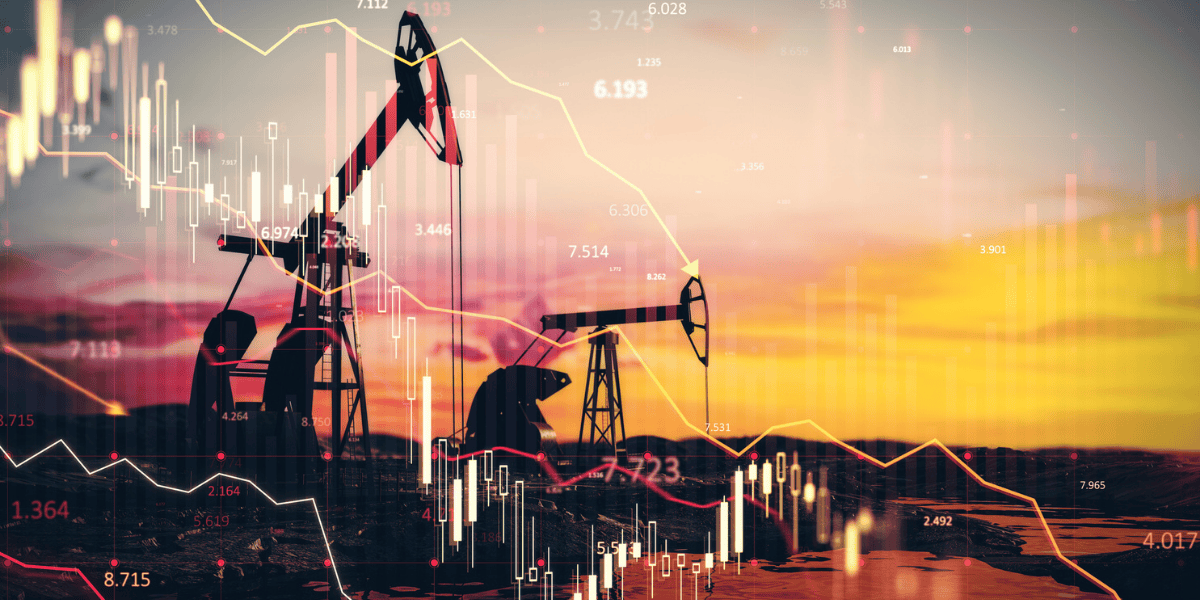
Correction remains the theme on Wall Street as the price of Oil is seemingly dictating all. WTI is back at $100. The price action has been pretty simple: Higher Oil has forced higher yields and lower stock prices. It has blanketed the Global Market. The Market often ignores geopolitics. Not this one. The military conflict in Iran is impossible to ignore. The impact is being felt wide and far.
The situation in the Middle East is extremely unclear. The conflict is full of mixed messages from pretty much all parties. Resolution is ambiguous. The timetable is unknown. This week, President Trump announced he postponed any strikes on Iranian energy facilities in favor of diplomacy. That provided a reprieve for both Oil and stocks. He said it came at the request of the Iranians, with talks ongoing despite statements to the contrary from Iran. That reprieve proved short-lived. The week ended with more selling.
America today is divided down the middle in so many facets. Support for this conflict is nearly 50/50 by the people. More specifically, recent polls reflect 44% support, 56% do not. People who don’t support this conflict tend to view it in a frame that Iran didn’t pose an imminent threat and the last thing we need is another extended war in the Middle East. People that support this conflict recognize Tehran’s newfound vulnerability and view it as an opportunity to once and for all put an end to 47 years of Iranian-led terror around the world. There are strong views on both sides and will not waver. Of course, politics engulf everything.
Regardless, the conflict now enters week 5. No coincidence, the S&P’s weekly losing streak is also at 5. The Market has largely taken the military actions in stride, considering the velocity and damage done. The S&P is down 9% from its all-time high reached in January. Keep in mind, it fell 20% during that tariff tantrum a year ago. The President said out loud that he thought the Stock Market would have declined more than it has and the price of Oil hasn’t risen as high as he expected. No surprise, both moved further in opposite directions off those words. The volatility has been palpable. The flip-flopping of headlines is jerking investors around. The White House has stated this short-term pain will lead to long-term gain. The Market is recalibrating all of it.
Something that few dispute: The United States Military is elite. It has no peer and is proving that once again. The Iranian military has been degraded. Its Navy is all but gone. Its nuclear program has been decimated. But winning the war and winning the peace are two different things. Iran is doing everything it can to hold the Global Economy hostage. The use of low-cost, high-impact drones has been extremely advantageous for Iran’s strategic moves. It’s the only leverage it has. It’s using it big time.
I attended a session with Michael Allen, member of the National Security Council under President George W. Bush. His commentary was very insightful. Allen asserted that President Trump needs to do everything he can to reassert control of the Strait of Hormuz. Right now, Iran is exercising its only leverage over us. The World is afraid to send tankers through the Persian Gulf. Right now, the White House is trying to get the right troops and the right assets in place in order to degrade Iran’s military capabilities around the Strait. Allen’s concern is this conflict could be seen longer term as a strategic loss if Iran has proven it could hold the world’s energy hostage. It reminded me of something Henry Kissinger once said: “Great power loses by not winning”.
Shutting down the Strait of Hormuz has long been considered the ultimate risk in combat with Iran. The narrow stretch of water sees 20% of global Oil and Liquified Natural Gas (LNG) supplies pass on a normal day. Today is anything but normal. Supplies have shrunk as traffic has come to a near standstill through the Strait. That’s what has sent the price of Oil skyward. The stated goal is to reopen the Strait of Hormuz as an international waterway not controlled by any one nation. But Iran has a role in this. Iran has demonstrated it is not afraid to use its newfound leverage.
The Market is trying to come to grips with the prospects of conflicting scenarios. One day, there’s talk of a ceasefire. The next day it’s a threat of escalation, termed “Final Blow”. Michael Allen said the next 10 days are crucial. The White House is trying to execute an escort mission, which will provide American military assistance and surveillance for Oil tankers to safely pass through the narrow channel. The US military is targeting Iranian cruise missiles along the coast as well as fast boats carrying mines. They’re also looking for waterborne drones. This is the prep work needed to get the Navy in a more comfortable place to open the Strait. And then they’d need to get the shippers comfortable. This is no easy task.
The Trump Administration is looking for an exit. But there is no obvious route. There has been plenty of discussion about a military pause or ceasefire. Our Washington sources say that many Republicans and some of Trump’s inner circle would embrace this approach. The conflict has caused significant economic pain to the region and the Globe. The problem for Trump, it’s not a win. That wouldn’t stop him from calling it a victory, mind you. But the unknown outcome would still linger. Our sources believe Iran would like this outcome. Iran is making much more money now than they have in years. It is selling Oil at a premium now instead of the previous deep discount due to sanctions.
The biggest risk is the White House declaring victory and pulling out prematurely. That would be devastating and could lead to more chaos. The Gulf states want the United States and Israel to finish what they started. But they’ve reportedly become frustrated with the contradictory comments and seeming lack of strategy. The only way to ultimately neutralize Iran would be to secure its Oil & Gas facilities. But taking Kharg Island might be too much. The Gulf nations are looking for stability and ultimately want to be rid of Iranian-rooted terror in the region. The Saudis, Emiratis and Qataris, among others, seek economic prosperity and pro-business policies.
Sending US ground forces into Iran is not attractive to the American people. Our sources say President Trump is aware that the Republicans are likely to get hammered in the midterm elections. They believe Trump is thinking longer term and, in his mind, taking Iranian Oil like Venezuela would be a major win for his legacy. It’s going to take time and lots of money to rebuild the Energy infrastructure and the region. But done right, it could yield a massive return on that investment. It’s a risky thing to do. But it’s something no other President did. So, there’s that.
Perhaps the biggest question is who is leading Iran? So many senior leaders of the Islamic Revolutionary Guard have been killed. Who is doing the negotiating, and are they credible? The President said he is not talking to the new Supreme Leader, the son of the previous leader. It’s being reported the White House is trying to find hardliners to negotiate with that can sell an eventual agreement to the IRGC. It’s such a complicated and confusing situation. Importantly, Israel has been ramping up missile launches as the White House looks for an off-ramp. Israel clearly wants regime change. However, regime change doesn’t seem to be in the cards. It’s more like finding the right bad guy you can deal with.
The Trump- Xi Summit is back on. This week, it was announced it will take place in May. It was originally scheduled for next week. It’s been said that Trump did not want to go while there’s still fighting in the Middle East. The President’s plan to go to China suggests he intends for this war with Iran to end prior to that trip. There is plenty for the Presidents to talk about. There’s also this: It’s widely believed that both China and Russia have been supporting Iran during this conflict. There’s also this: Ukraine is helping the US and the Gulf States. Ukrainian President Volodymyr Zelensky visited the Saudis to help understand dealing with drones, an expertise his nation has achieved for survival.
China has its sights on being the greatest Superpower in the 21st century. China has a great deal of influence with the Iranians. It has also increased its relations and presence throughout the Middle East. Much like the Gulf nations, China is focused on economic stability and success. It depends greatly on Middle East Oil. China’s supplies have slowed while its costs have spiked. It wants an end to this war. But it seemingly also likes seeing the United States entangled in foreign conflict.
China has been diversifying its energy supplies, building up a strategic reserve of over 1 Billion barrels of Oil while the U.S. sells its off. In addition, China has ramped up its solar, nuclear and coal production, electrifying its Economy which is what fuels AI. To be clear, China is not embracing renewables because of the environmental beliefs. China is investing in all sorts of energy sources to provide for its insatiable drive for power. What’s more, China possesses the vast majority of Rare Earth minerals, which are required to build digital devices.
This conflict with Iran has been called the first “AI war”. Artificial Intelligence is playing an increasing role in military operations. Innovation is moving so fast. Syria was considered the first social media war as its authoritarian government spread mass misinformation across digital channels. Ukraine is called the “Drone War”, as the nation has aggressively embraced unmanned devices like never before to monitor and attack its Russian enemy. War has always triggered innovation. As they say, Necessity is the mother of Invention.
The AI War is evolving quickly. Admiral Brad Cooper, the head of US Central Command, said the Pentagon was “leveraging a variety of advanced AI tools” to sort through “vast amounts of data in seconds” and make “smarter decisions faster than the enemy can react.” A decade ago, the Pentagon launched an initiative using computers to sort through video and data. It uses Large Language Models to process and analyze the data in real-time and give actionable ideas and recommendations. Modern warfare reflects the Digital Age.
The price of Oil is back below $100. But the prospects of moving back into the $50s, the level prior to the conflict, seem quite low anytime soon. Though the Market figured out quickly this was not going to be a 3-4 week conflict, it still isn’t pricing in a prolonged event. Oil is experiencing backwardation. This occurs when the front-month is higher than the out-months. The price for West Texas Intermediate (WTI) closed the week at $100 per barrel. But the December contract for WTI is $77. What’s more, it actually declined today, while the current contract for May jumped nearly 7%. The price of Oil is still elevated in the July contract, priced at $90, but it keeps declining month-over-month. That suggests the conflict could last a couple more months, but the Market seems to be pricing things not getting materially worse. The shock is in. WTI surged over 40% in just a month.
Here’s the deal: The issue is time over price. Oil spikes that prove temporary tend to be less impactful. If it falls back to the $70s, economic activity could normalize quite quickly. But an extended period of $90+ Oil will ultimately weigh down the Global Economy. So far, earnings estimates have not been meaningfully lowered. That’s what the Market is focused on.
The United Kingdom is feeling the most economic pain thus far, outside the Middle East. The British Economy is now expected to grow just 0.7% this year, roughly half what it was previously expected. It’s now the second weakest Economy among the G7 nations and the slowest in Europe. Germany, France and Italy are also feeling the negative impact. Inflation is now projected to be 4% this year on the back of spiking Energy prices. It was estimated to be 2.8% prior to the military conflict. Europe is highly dependent on foreign energy supplies.
The damaged infrastructure will take time to repair. And getting Venezuelan Oil back to peak production will also take time. To that end, gas prices across the country are now $4 a gallon on average. They were $3 a month ago. They’re seeing $6 again in California. It might not stop there. Supplies in the Golden State are shrinking, and its elevated emission standards make replenishment difficult as it imports 20% of its refined products. California is an island when it comes to fuel.
Food prices are up, too, with little sign of decline. Roughly 1/3 of global fertilizer passes through the Strait of Hormuz on a daily basis. It’s not passing through today. Goldman sees US food prices up 1.5% this year. But the data won’t show up til Summer. Farmers locked in lower prices last year. It’s when they start buying fertilizer for the Fall when it will be felt. Of course, opening the Strait would provide great relief to high prices.
Fueling the AI revolution will be less impacted. Cheap and abundant American Natural Gas prices have remained low. It’s the other inputs like Rare Earth minerals, Copper and sulfur that are seeing price spikes. Those are found around the Globe. A lesson learned in COVID, supply chain strain, has returned. Co-Dependency is everywhere in Globalization. As alliances get tested and strained, nations are increasingly looking out for themselves. That inherently leads to higher prices.
Bond prices have fallen in March. That happens when yields rise. America has a lot of debt and the cost to service has grown. There were a number of Treasury auctions this week. They didn’t go so well. Demand for 2-Year, 5-Year and 7-Year Treasuries weren’t as strong with inflationary pressures on the rise. The price of Oil has sent yields skyward. They’re very correlated presently. Borrowing costs followed. The benchmark 10-Year Treasury yield is pushing 4.5%. The 30-Year is at 5%. Mortgage rates have jumped too. 6% loans are closer to 7% now. The price of Money is getting more expensive. There are also concerns the Fed might have to pivot again. What was looking like some rate cuts at the start of the year might now be rate hikes. The Bond Market is factoring in higher prices ahead. It doesn’t like it.
The Dow and the Tech-heavy NASDAQ are officially in correction mode, defined as a 10% decline from its highs. What’s new, the Tech Titans have been hit too. The AI trade completely reversed. The bubble is burst. Things have gotten pretty oversold. The trend of selling on Fridays persists. With so much uncertainty and risk out there, traders are reluctant to be long going into the weekend. That was evident today.
One of our long-term Street sources reminded me of an old Market rule: Bottoms aren’t complete until the Generals get taken out. It rarely stops with the foot soldiers. The Tech Titans haven’t necessarily been taken out. But they sure have been wounded. Those Darlings have been treated as duds. That needed to happen for a potential bottom to form. It’s a process.
The end of the quarter is near. The Bears have taken a tight grip of this Market. The correction deflated all bubbles. Even Gold got hit. Energy has been by far the best performing sector, for the week, for the month, and for the year. We will soon see what the transition from Q1 to Q2 brings. March turns to April. Spring has sprung. Stocks were ripe for a reset. For now, higher Oil means higher yields and lower stock prices. Importantly, the reverse is true too.
Earnings Season is just around the corner. We’ll see what Corporate America has to say about today and tomorrow. The Market is forward-looking. It learns from the past and processes the present while trying to price in the future. That’s our job as investors. It’s a job we take so seriously.
Have a nice weekend. We’ll be back, dark and early on Monday.
Mike