For those of you who would prefer to listen:
Volatility continues. The Stock Market this Spring has behaved like few times in decades. Prices have moved ferociously, in both directions. Oil up, Oil down. The price of Oil has been driving all things Market-related ever since the conflict in Iran began. The damage is palpable. But the Market seems to be looking past the now and onto what’s next. Of course, that is anything but clear. I’ll try to make some sense of it. The answer is found somewhere between the Middle East and the Dark Side of the Moon.
At the final hour on Tuesday, a ceasefire was struck, preventing further escalation. Well, sort of. Israel kept bombing Lebanon. The rules for this ceasefire seem pretty ambiguous. But a meaningful reduction in fighting is definitely positive. The real question is for how long? This is merely a pause. Besides, the Strait is still effectively closed.
The Market seems to be finding comfort in the prospects for some sort of a deal. Talks are expected to continue over the weekend in Pakistan. The problem seems pretty clear: Both sides have what they say are non-negotiables. And they are core to the conflict’s inception. There isn’t much middle ground when it comes to nuclear enrichment and an open waterway for Global Oil. Iran wants to be paid tolls for ships to pass the Strait of Hormuz. And they want it in crypto. There sure is a lot to sort through on that subject. That has to be a non-starter.
The fact that the Pakistanis are involved in the peace talks is quite significant. This gives them tremendous standing and credibility on the global stage. It’s a major turn for this South Asian nation. India is not excited about this one bit. Pakistan’s ascent undermines New Delhi’s longtime strategy of trying to isolate its neighbor and cast it as a bad actor that sponsors terrorism. To India, having the talks in Islamabad lends legitimacy to Pakistan’s new leader, who has forged close ties with President Trump. But India has relations with both sides in this war, so an end to the fighting would definitely be welcome. The geopolitical implications of this conflict are layered throughout the globe.
The Oil Market has never seen anything like what we’ve experienced in the 2020s. Covid saw a 20 Million barrel demand collapse, almost immediately. The price of crude actually went below zero. Who knew that was even possible? Conversely, the Strait of Hormuz shutdown caused a 20-Million-barrel supply collapse. Both were shocks to the system. Commodities are spot price assets. They’re priced in futures contracts. The May contract, which is the current price, hit $117 this week. It fell to $95 after the ceasefire was announced. It went into the weekend just under $100. But the December contract has been substantially lower throughout the conflict. That’s the Market suggesting things will ease materially by year-end.
The battle has definitely taken its toll. The economic damage is significant. It will take time and a whole lot of money to get things back on track. Global Energy infrastructure and supply chains have either been destroyed or are completely out of whack. Europe and Asia have felt it the most, outside the Middle East, of course. But there has been one beneficiary. The spike in the Oil price has benefited Russia significantly. Sanctions were lifted, and Russia’s Oil sales have increased. They’re effectively doubling their income on a monthly basis now. Iran is also seeing a spike in revenues compared to pre-conflict. So there’s that.
Higher energy prices are inflationary. That’s been evident at the pump. We just received the official inflation data on Friday. The Consumer Price Index (CPI) for March came in at a 3.3% increase compared to a year ago. It was up 0.9% from February. That was the hottest in 2 years. The spike in Energy prices was the driver there. But importantly, it was less than feared. Unfortunately, it’s continued in April. Prices remain high and are rising. Gasoline prices jumped 21% in March. That was the largest monthly increase since data has been recorded back in 1967. Think about that for a second. The price of Oil dictates pretty much all things economic at present.
The price of gas is always a sticking point with American consumers. Well, for those of us who still drive internal combustion engine vehicles. As we know, California is amongst the highest gas prices in America, averaging $5.91 this week for a gallon of regular 87-grade unleaded. The national average is $4.15.
Have you ever wondered what’s in the price of gas in the Golden State? Well, here you go:
Roughly half the price you pay at the pump in California is based on the price of Oil, which is refined into gasoline, among so many other products we use in our daily lives. That’s pretty standard across the country. What’s different, California is considered an “energy island”. There are no pipeline connections to the rest of the country. We don’t bring in refined products via pipes from other states. California relies on local production and more expensive shipped imports. This makes it highly sensitive to global shocks. California refineries are old and have periodic outages. Energy companies are reducing or shutting down refining capacity because it costs twice as much to operate in the Golden State compared to the rest of the country.
As we all know, California has high taxes. State and Federal taxes account for roughly 85 cents per gallon at the pump. Most of that is California tax. California’s climate policies add a significant premium that is often embedded in the wholesale price before it reaches the gas station. The environmental charges range from 50 to 65 cents per gallon. This covers the cost of turning crude into gasoline. California requires a specific “California Reformulated Gasoline” blend to meet its air quality standards. This blend is more expensive to produce, and fewer refineries can make it. That immediately leads to higher costs. That tends to run 85 cents per gallon. That’s up to $2.35 per gallon right there before the price of Oil, the cost to refine, and profit. The last thing I’ll add is the vast majority of gas stations are privately held or franchised. The large Energy companies, like Chevron and Exxon, own less than 1% of the stations in America. I bet most of you didn’t know that.
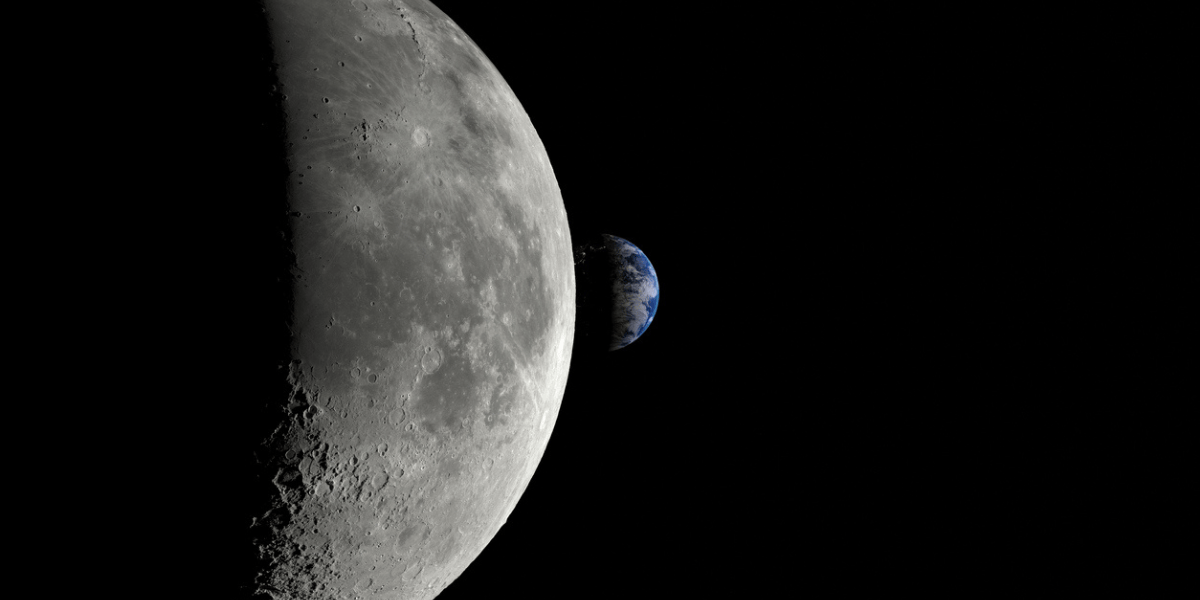
You know what else is happening in California today? The astronauts on the Artemis are coming back home. They are expected to splash down in the Pacific Ocean, off the coast of San Diego, around 5:07 pm local time. What an incredible voyage it’s been. This was the first human mission deep into space since the Apollo program in the 1970s. These astronauts traveled over 250K miles from Earth, circling the far side of the Moon. They traveled further than any humans in history. The previous record was 248K+ miles set by the Apollo 13 crew in 1970. This is just awesome stuff.
In Greek mythology, Artemis was the daughter of Zeus and Leto, and the twin sister of Apollo. She was the Goddess of the hunt, guardian of young girls and protector of nature. Apollo was associated with the Sun while Artemis was tied to the moon, embodying wilderness and night’s guiding light. NASA chose the name Artemis as the Goddess of the Moon and to signify the intention of eventually landing the first woman on the Moon.
Before they left, the 4-member crew said they hoped this mission would be forgotten. Far from it. Hopefully, it will be remembered as a moment of inspiration, when people started to believe that America can once again do the near-impossible and change the world. Perhaps generations are seeing what’s happening on Earth and are inspired by what could be. It’s a reminder of how small we all are in the grand scheme, but how impactful we humans can be as agents of good when united. You know, that small world song isn’t wrong.
The launch of NASA’s Artemis II mission is reinforcing investor focus on innovation and the long-term growth potential of the Space Economy. While Artemis II emphasizes reliability over cost efficiency, the longer-term trajectory points toward reusability as a requirement rather than a luxury. Elon Musk’s SpaceX has made that crystal clear and possible. Historically, NASA has opted not to reuse boosters for this mission in order to maximize the probability of success. However, reusable systems will be a requirement if NASA plans to sustain these lunar missions, not to mention the ultimate mission to Mars.
Competition in the Space Race is heating up. China is targeting a crewed lunar landing by 2030. This certainly fuels the geopolitical urgency to America’s space efforts. Its largest Aerospace and Defense companies are making it happen. Among them are Lockheed Martin, serving as prime contractor for the Orion capsule. Northrop Grumman built the solid rocket boosters. Boeing produced the core stage of the Space Launch System rocket. L3Harris supplied key engine components. Elon Musk’s SpaceX and Amazon Founder Jeff Bezos’ Blue Origin are big players in Artemis III.
One area that is emerging is nuclear-powered spacecraft. NASA’s Space Reactor One program, set to launch as early as 2028, has a goal of improving propulsion efficiency and reducing travel time. Nuclear provides constant power. The systems could operate for years with minimal refueling. That could accelerate sending humans to Mars.
The Aerospace and Defense sector has been super active. It’s the Market’s intersection of technological innovation and geopolitical competition that is driving investment. The conflict in the Middle East and the mission around the Moon are clear evidence. In a way, the Artemis program serves as both a symbolic and practical anchor for this theme. Its success or failure will not just shape the future of human space exploration. It will also influence how investment flows into the next generation of Aerospace and Defense companies.
Despite the massive selling in March, this April rally has the S&P just 2% below those all-time highs hit in January. The Stock Market broke a 7-day win streak Friday but finished back-to-back weekly gains. The AI-trade is back on, leading the charge. It’s pretty remarkable and quite surprising considering all the pressures circling Planet Earth. The Market has a way of confusing people. Just when you think you’ve figured it out, it tricks you. It’s humbling. Over time, you can’t outsmart the Market. The Market is smarter than all.
This Artemis mission is a moment. The battle in the Middle East reflects today. The space flight Artemis represents tomorrow. It is a direct reflection of some of the best human attributes in existence. It’s innovation. It’s hard work. It’s risk-taking. It’s patience. It’s daring to dream and then doing something about it. And you better believe, it’s investible.
Have a nice weekend. We’ll be back, dark and early on Monday.
Mike