For those of you who would prefer to listen:
Apple CEO Tim Cook announced he is stepping down. This was both a surprise and no surprise. The more you think about it, it makes perfect sense. Tim Cook has done a masterful job of managing the company for the last 15 years, after taking the reins from Steve Jobs.
Cook had huge shoes to fill. He definitely lacked the presence and charisma of Steve Jobs. Anyone would. No matter. Cook was an operator. He did things his way, and he did it really well. Tim Cook was the right guy at the right time to execute Steve Jobs’ vision. He effectively kept the Jobs’ brand alive in Cupertino. Apple’s stock flew nearly 2,000% on Cook’s watch. It became the first $4 Trillion company. It was under $350 Billion when he took over in 2011.
Steve Jobs is still seen as synonymous with Apple. He thought differently. He was a dreamer. He was a visionary. Jobs’ greatest gift was seeing things before others did. He made complicated devices easier to use and more attractive to own. He created the Apple way.
Steve’s vision went beyond Apple. He also helped kickstart Pixar’s success, seeing the future of digital animation. He later partnered with Disney, bringing a child’s toys to life on the big screen. Toy Story changed Hollywood forever. Disney ultimately bought Pixar. Jobs joined Disney’s Board.
I have studied Disney for years, as an investor, as a business owner, as well as a consumer. I have always been drawn to its unique brands, its creative and innovative spirit, and its ability to evolve over the decades. Walt Disney is one of the greatest American success stories of all time.
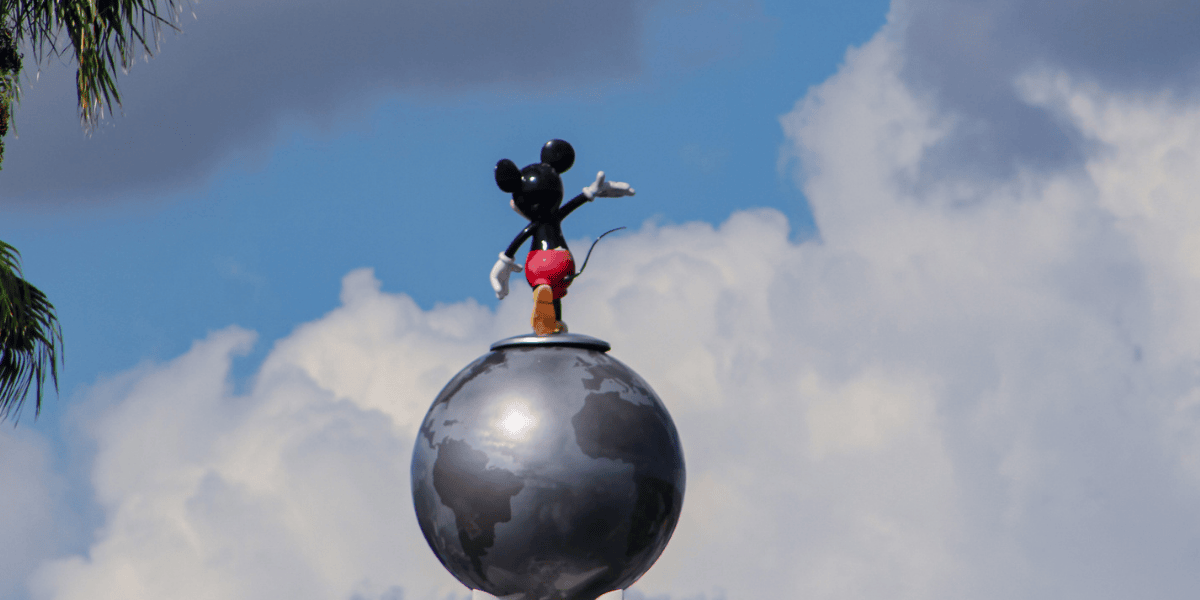
The vision apparently popped into Walt Disney’s head on a train ride from New York to Hollywood. The year was 1928. Walt was 27. His young company was struggling. He lost his creation, Oswald the Rabbit, to a distributor. Walt knew he had to come up with a new character, and fast. He came up with a mouse. He named it Mickey.
Disney’s new character was not an instant success. In fact, the first couple of animated shorts fell flat. His luck changed with Steamboat Willie, which premiered in November of that same year. It ran as a short before a full-length feature film in a movie theater on Broadway. It was one of the first cartoons to ever successfully utilize synchronized sound. It was so popular, it was reportedly talked about more than the film it was meant to just open for.
Walt Disney received $1,000 for a 2-week run for Willie. That was the most ever paid for a cartoon on Broadway at the time. Walt Disney Studios was saved. His employees still had a job. Nobody quite knew what was ahead. An iconic cartoon character was born.
Walt kept innovating by trying new things. He was not satisfied staying with short cartoons. Disney developed a multi-plane camera that shot several cels. This allowed drawings on pieces of glass to be set at various distances from the camera, creating an illusion of depth. A decade after Mickey was born, Walt debuted Disney’s first feature-length animated film: Snow White and the Seven Dwarfs. Walt won his first Oscar.
The Walt Disney Company IPO’d in 1940. Disney needed capital to fulfill his dream and vision. He sought out investors that shared his long-term vision and were willing to provide support while he and his team made things happen.
Walt Disney had high standards and high expectations of those with whom he worked. His employees were called “cast members”. Everyone played an important role. Disney employees are still called cast members to this day.
In the early 1950s, Walt had another big idea and bought over 200 acres of orange groves in Anaheim. Walt created a Research & Development group, what’s now known as Walt Disney Imagineering. You had to think it to live it. Walt loved his Imagineers.
Disneyland opened in 1955. It sort of stumbled out of the gate. But that didn’t stop him. He learned from mistakes. After just 2 months, over 1 Million guests attended. It changed the world of amusement. Walt launched the Mickey Mouse Club on ABC television that same year.
A decade later, Walt and his crew designed 4 exhibits for the 1964-1965 World’s Fair in New York City, including “It’s a Small World.” Another iconic attraction was born. A year later, Walt Disney Studios purchased land in Orlando for his vision of EPCOT (Experimental Prototype Community of Tomorrow). There was far more land to work with in Florida than they had in California. This foreshadowed the next big project, which led to the creation of Walt Disney World. Walt died the next year. He was only 65.
Walt’s brother Roy ran the company for the next 5 years, until his death in 1971. That was the year Disney World opened. For the next decade, the Company was led by a team trained by the Disney brothers.
Under this group, Walt Disney Imagineering really took off. This was the design and development division for the theme parks. It was a team-led venture. They understood the vision. They took it to new levels. They made it part of their own. EPCOT officially opened. Tokyo Disney followed next.
The company started losing its way by failing to innovate and stay relevant in the mid-80s. Its stock was weak. A corporate takeover was brewing. But the company’s legacy was saved by the arrival of a new CEO named Michael Eisner.
The new management team immediately saw creative ways for Disney to maximize its assets. Bold decisions were needed. The Disney Channel was launched. Next came the Sunday evening instant hit: “The Wonderful World of Disney”. The classic Disney animated films were released on video cassette with great success. Disney classics soon reached the top of the all-time best-seller lists.
The late 80s saw a Disney Renaissance. The company’s filmmaking division took off in 1988 as Disney led Hollywood studios in box-office gross for the first time in history. The new success came from blockbusters “Who Framed Roger Rabbit”, “Good Morning, Vietnam”, “Three Men and a Baby”, and “Pretty Woman”.
Returning to its roots, Disney animation also began reaching even greater audiences, with “The Little Mermaid” being topped by “Beauty and the Beast” in 1991, which was in turn topped by “Aladdin” in 1992. The “Lion King” topped them all in 1994, which remains the top-grossing animated film of all time. Disney then bought ABC Cap Cities, which included the budding crown jewel, ESPN. Euro Disney opened in Paris during this run. Disney’s brand had never been stronger. This all happened nearly 3 decades after Walt Disney passed.
A major anniversary came in 2005 as Disneyland celebrated its 50th. All of the Disney theme parks joined in the Happiest Celebration on Earth. A brand-new theme park, Hong Kong Disneyland, opened. California Adventures opened too. Michael Eisner retired, and a new CEO emerged. His name is Bob Iger. This Disney leader was the first to have 2 different terms. His retirement in 2020 was short-lived, returning to the company to clean up messes during Covid. Iger just stepped down again.
Bob Iger is considered one of the best CEOs in the history of Corporate America. Under Iger’s watch, the company experienced tremendous success innovating organically while also making some very strategic acquisitions. Disney acquired Pixar, Lucasfilm, and Marvel Comics under Iger. ESPN dominated sports. The company also rolled out box office smashes tied to its Disneyland attractions, led by Pirates of the Caribbean. It uncovered a hidden jewel in “Frozen”. The company set sail with its cast members to the delight of its loyal fans with cruises on the high seas and opened a resort in Hawaii. Disney was flying high. Lately, it’s come back down to Earth. It needs a new spark.
The Disney brand is recognized the world over. The company has seized opportunity after opportunity to continue to innovate and expand Walt’s vision. When Covid hit, the Walt Disney Company was threatened with closures of its parks and movie theaters around the globe. But the innovative spirit adjusted quickly with an all-out execution through Disney+ as people sheltered in place. Disney also bought the rights to Hamilton and streamed it on the 4th of July 2020. Surviving crises, financial, pandemics, and wars, Disney is built to last. It has not only lasted. The Walt Disney Company has thrived.
The Walt Disney story is as iconic as anything our nation has ever experienced. It’s one of America’s greatest success stories. It transcends generations. It’s innovative. It’s dynamic. It’s proven bigger than any one person. It is centered around values and a vision, with a relentless commitment to its customers. The Walt Disney Company has survived the test of time and disruption. That includes World Wars and Global pandemics. Audiences change. Mickey evolved. The company has transitioned over the years, but has proven that the innovative spirit runs deep.
Running a business is challenging. It requires both commitment and flexibility. Success is to be praised. Success is to be rewarded. Success is to be studied. Success is to be valued. Success is to be embraced. Success breeds success. It builds upon itself. Success is also to be guarded. It raises the bar. It pushes comfort levels. It also can breed complacency.
Success requires risk-taking. Success happens rarely by luck. It’s certainly not guaranteed. But sustainable success cannot continue without the innovative spirit and that relentless commitment to providing value to its audience. Success comes when a good idea is put into action. Sustainable success needs the support of a team and strong leaders throughout the chain.
The Walt Disney Company and Apple have new leaders again. They face new challenges. The Digital Age is in full force. AI is its biggest threat, but perhaps its greatest opportunity too. This is now the Josh D’Amaro and John Ternus terms. It’s a new day for these dynamic American companies.
D’Amaro and Ternus have made names for themselves internally and with industry insiders. Externally, they’re relative unknowns. It’s their time to find their voice and articulate a vision for the future. The opportunity is there. Challenges are always many. Success is seldom predestined. It’s what you do with opportunity which determines fate. The new Disney and Apple leaders stand in the footsteps of giants.
Tim Cook and Bob Iger are household names. That wasn’t always the case. They faced challenges that were seen as opportunities. They thought differently than their predecessors while embracing the roots. Both leaders leave their organizations in better shape than which they found them. That’s a mark of success. But new challenges are a constant. These are disruptive times and they operate in disruptive industries. AI is the ultimate challenge which also represents opportunity. The reins have been handed over to new blood to face them. They’ve been identified as the right ones for the job.
I found that learning through others’ experiences is an effective way to enhance your own decision-making. Understanding why something successful happens provides the knowledge so that it can happen again and again and again. Anyone can do it. The problem: Very few do.
Here’s the deal: Walt Disney didn’t invent motion pictures. He didn’t invent roller coasters nor attractions either. Disney certainly didn’t invent storytelling. He just enhanced all of it with a vision and a plan and a level of commitment and tenacity with high standards that few others possess. Steve Jobs didn’t invent the cell phone or personal computer. He just made them better. Jobs didn’t invent the mouse. He made it popular with his Mac. PC makers followed. Customers did too.
These great American innovators possessed a special skill. Walt and Steve somehow knew what their audience wanted before they did, and kept stretching their imagination, which stretched theirs. They inspired generations. They left their mark. It lives on.
Dare to dream; That’s the Disney way. Think different; That’s the Apple way. That’s their edge. Today, both companies are at a pivot point. There have been struggles. They need to innovate again. We will soon see what these new leaders have up their sleeves as they lead these iconic organizations into the future. It’s altogether normal. It’s evolutionary. And to think, it all started with a Mouse.
Have a nice weekend. We’ll be back, dark and early on Monday.
Mike