For those of you who would prefer to listen:
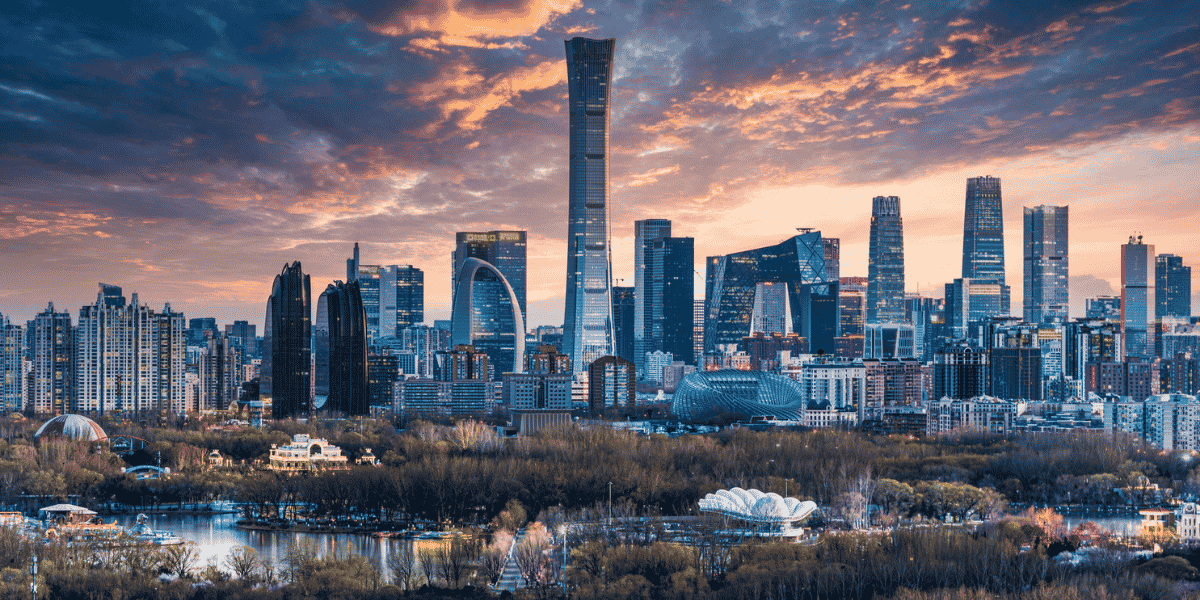
The widely anticipated Beijing summit has come and gone. There was pomp, circumstance, and a whole lot of handshakes. But there was very little in the way of meaningful action. There were no major breakthroughs. There were no confirmed deals. And according to our sources, this is as good of an outcome as could have been expected. The result is seemingly more stability in the relationship of the 2 superpowers and the status quo for policies. In other words, they kicked the can down the road, hand in hand, with smiles.
It’s a complicated yet critical situation. China is definitely no ally of America. President Trump has long been critical of China’s unfair trade behavior. China’s growth has come at the expense of the U.S. The World Trade Organization allowed for that. The two largest economic powers have become rivals yet are inextricably connected through economic trade. They both need each other. That’s why sometimes they are considered friends while other times, they’re like enemies. The term “Frenemy” sure fits the bill. We mustn’t forget Trump’s words referencing President Xi in 2020: “He’s for China, I’m for the U.S., but other than that, we love each other.” Those are nice words, though I’ve yet to find evidence that the Chinese President reciprocated.
What was expected out of this summit? This from one of our Washington sources leading up to the meeting:
“There has been little advanced preparation and there isn’t enough common ground for a grand bargain that would materially alter the US-China economic relationship. Trump hopes to announce Chinese commitments to purchase American products like soybeans and airplanes and perhaps Chinese commitments to invest in the United States – Administration officials have made clear Trump is heading to China looking for President Xi’s help on Iran.”
According to one of our sources, President Xi had 3 objectives in this summit. First, he wants the Strait of Hormuz opened for economic purposes. China buys roughly 90% of Iranian exported Oil. Xi also wants a period of stabilization for the next 2 years, knowing there will be another President in the White House in 2028. Stability with the United States means continued exports into the large consumer space, which is key for Chinese economic growth. It also reduces the likelihood of excessive tariffs on Chinese goods imported into America. Finally, he sought an agreement to allow American technologies to go to China. China is very transactional and economically oriented. Obtaining a stable relationship with the United States is good for business and good for the Chinese Economy. China needs growth. Our sources believe that China’s Economy is currently growing at 2-3% per year, far less than the 5% the nation reports.
But before anything else, the Chinese President made clear that Taiwan is a Third rail subject and the United States needs to fall in line with Beijing’s policy. China sees Taiwan as its own, much like Hawaii is to America. Of course, Taiwan sees things differently. It believes it’s a sovereign nation, completely independent of China. Here is why it’s so critical: Taiwan is responsible for the manufacturing of nearly 90% of advanced semiconductors around the globe. It’s driving AI. It’s a huge deal for this Digital Age. For decades, the United States has had a policy of “strategic ambiguity” towards Taiwan. There was no news on Taiwan at this summit. That was the best news possible, according to our sources. Strategic ambiguity continues.
President Trump is very transactional, too. He seems to always be looking for a deal that benefits America, long believing that the rest of the world has taken advantage of our nation. The family business has done well, too. Multiple leaders from Corporate America attended the trip with the President. Represented were CEOs of Apple, Nvidia, Boeing, Cargill and Tesla. For Elon Musk and Tim Cook, China is a major Market for Teslas and iPhones, which are increasingly facing Chinese competition. Silicon Valley wants free and fair access. China doesn’t always play by the rules.
The scorecard wasn’t as substantial as the leaders returned home on Air Force One. The goal of increasing the sales of the 3 B’s fell short of expectations. Those “3 B’s” were Boeing, Beef and Beans. It was reported that China will buy 200 Boeing planes, with the potential for a total of 750. China didn’t confirm this. Boeing CEO Kelly Ortberg was likely looking for more. President Trump said China will buy over $10 Billion of American agriculture. China is the largest buyer of soybeans – by a long shot. It already committed to an annual 25 Million metric ton purchase agreement last Fall, covering the next 3 years. But it didn’t increase it this week. That probably disappointed the Cargill CEO. When it came to an update on the prospects of selling Nvidia’s AI chips to China – there was none. Stocks rallied earlier in the week, with expectations of expanded business. Semiconductor stocks went skyward upon news the Nvidia CEO Jensen Huang was a late addition to the President’s entourage. The gains evaporated with the absence of bigger news.
Our sources say China believes they are winning the race in the 21st century. They believe they are winning in technological advancements and foreign policy on the Global stage. The Asian nation has innovated quickly and is competitive with the United States in AI and quantum computing, which they had little advancement a decade ago. What’s more, China continues to dominate in Rare Earths. These are the key materials on the periodic table found in semiconductors, flights to space and this revolutionary AI race. It has also grown its military capabilities while it sees the United States depleting its munitions in Ukraine and the Middle East. This is not necessarily fact, but it’s a view on how the Chinese are thinking strategically.
The subject of Iran wasn’t absent at the meetings. But it seemed quite muted. Importantly, China has been providing support to Iran during this conflict. Xi wants the Iranian regime to remain in place for stability in its economic alliance. China is the largest buyer of Iranian Oil, by a long shot. Over 90% of Iranian exports go to the Asian nation. Both Presidents agree the conflict needs to come to an end and the Strait of Hormuz needs to re-open. They also agreed that Iran should not obtain a nuclear weapon. Those are just words, though. President Xi hosted Iran’s Foreign Minister to Beijing last week, a clear message of its committed alliance. There’s also this: Xi doesn’t hate that the United States is using so many munitions in Iran presently. Though China has felt economic pain from the conflict, the battle reduces the military capacity to use in Taiwan should a conflict there arise.
President Trump has lost some of the leverage he had over China when he implemented those tariffs a year ago. His approach to the conflict in Iran has alienated many of our allies. Our sources believe Xi sees an opportunity to play Global peacemaker while influencing a better outcome for China and Iran. Our sources emphasized Xi’s strategic diplomacy this week, shaking hands with every Trump cabinet member, including the biggest China Hawks. It’s important to remember, Xi has no term limits. He doesn’t have to concern himself with domestic polling or midterm elections.
Next up, Vladimir Putin goes to Beijing. The Russian leader is in no position of strength. Its Economy has been hampered by sanctions and a war it isn’t winning. There are rumors of opposition brewing within Moscow. It’s been said that he is in a state of panic as he ages. He doesn’t travel much anymore and spends most of his time in seclusion. Putin notoriously surrounds himself with yes people, telling him what he wants to hear, rather than what’s needed. It’s not a good situation. But China and Russia have an alliance, mostly predicated on countering American supremacy.
Something to consider. China has really ramped up its military capabilities and has been testing regularly in the South China Sea. But the thing is, the Chinese military hasn’t faced a real battle in decades. Preparation and execution are 2 completely different things. What’s more, Xi has purged many of his senior military leaders of late. The Chinese President has likely watched Russia’s short-comings in Ukraine and America’s near flawless success in Venezuela with great interest and trepidation. The U.S. Military and Silicon Valley are elite. But there’s so much more to governing and strategy. That’s made this conflict in Iran is so confusing and messy.
The Chinese President indicated that America is in decline. Not so. American allies, namely Europe and Japan, certainly are. Aging demographics, slow economic growth, and lack of investment in technology has held them back. The United States is still the undisputed leader. The wildcard of Donald Trump confuses China. He has proven to be highly unpredictable. At times, he acts like President Xi’s best friend. But he also attacks the nation economically with tariffs and military engagements with its allies. President Xi prefers to be scripted with stability. President Trump is anything but.
An important takeaway from this summit could be this was merely a learning lesson for both sides. How each other feel about global trade, Taiwan, and the Middle East are critical issues. Our sources say Xi is playing the long game in Taiwan and he’s winning by inches every day. The future of Artificial Intelligence is ultimately the most important issue, and both nations are leaders and in it to win it. Can there be 2 winners? Of course, that question is unanswerable today. But it’s as important as anything on Planet Earth.
Back to the Market:
Despite Friday’s sell-off, the S&P banked its 7th consecutive weekly gainer. That’s the first time that’s happened since 2023. Tech hit the brakes after a historic run. The 6-week win streak for the Tech-heavy Nasdaq came to an end. But make no mistake, the AI trade has been on since April began. In fact, in the 32 trading sessions since the March low, Tech recorded a daily gain on 25 of those days. It basically went straight up. A breather was inevitable. A breather was necessary. We see more corrective price action ahead, while still constructive on the rest of the year. It’s an interesting setup for Nvidia to report earnings next week.
Bonds have felt pressure, too. Yields jumped substantially this week. It’s been happening all Spring. The 10-Year Treasury punched through 4.5% for the first time in a year. The 30-Year is above 5%. And the Tech Titans keep issuing long-term debt to pay for AI. Investors keep buying it.
Inflation is still a problem. The primary reason: Oil. WTI took another leg higher and is firmly above $100 heading into the weekend. The price at the pump remains at multi-year highs. The Market is now pricing in the next Fed move is not a cut but a hike. And there is a new Fed Chair who was basically brought in to cut. Americans are feeling the pain at the pump. China is feeling it too. The whole world is facing high prices and slowing growth. Well, everywhere but AI. And it’s all Market-moving.
Have a nice weekend. We’ll be back, dark and early on Monday.
Mike